Sexual violence in war, conflict and migration: A mental health toolbox for helpers
what is this toolbox and who is it for?
how can you use it?
what does it cover?
This toolbox is developed as a collection of the tools presented in the manual “Sexual violence against boys and men in war, conflict, and migration – A mental health manual for helpers”. It represents a small sized, easy to handle sample from the manual.
This toolbox is developed for helpers who want to provide culturally sensitive psychosocial help and support to men and boys who have survived gender-based violence (GBV) and sexual trauma during war, conflict, and crisis situations, on the run or after arriving in safe place.
If you are new to the topic, we recommend that you study this toolbox carefully, and also read the complete manual, to be prepared for your demanding task.
If you are an experienced helper, or have received training based on the manual, this toolbox can be a useful companion, reminder, and shortcut to the exercises and stories you want to include in your practice.
You can use the toolbox in different ways. It can be used for organised teaching and guidance, and also for self-study, alone or in groups. The toolbox contains practical exercises (for example stabilisation exercises) that can be usefully carried out with others. This can be seen as a collection of good ideas and as a practical resource in daily work. It also provides some background knowledge that can be useful also in conversations with those concerned. The stories can be adapted to your cultural context.
The toolbox explores the psychological meaning of trauma and how traumatic events can affect mental health. What are the signs of severe stress? How can you assess and understand them? How can counsellors approach a boy or a man shortly after he has been exposed to frightening and violent experiences? How to meet him in what is hurting and how to create a safe space for supportive conversation? What forms of contact can help the survivor recover and feel better? How can you prepare and handle reporting of human rights violations, and how can the safety and rights of victims be safeguarded?
Human rights and respect are central values of the toolbox. The fact that the toolbox has a clear human rights focus can also help to strengthen knowledge about human rights and how this can have an impact on practical work. The fact that the people we meet have themselves been victims of serious human rights violations and may have thoughts on how this should be handled is a good argument that we as helpers can benefit from strengthening our own knowledge of the relationship between human rights, human rights violations and providing help.
Please get in touch to suggest changes to this toolbox, give feedback, find a self-help or peer supervision group, offer your services as a helper, help us evaluate the toolbox, participate or offer trainings based on the manual.
What you will learn
A toolbox based on human rights
Get an overview of how you can use the toolbox. Understand how human rights principles, and the consequences of violating them, can be of use in your work.
Knowledge
Learn about the prevalence of sexual violence against males, understand reactions to traumatic events and how culture, gender stereotypes, guilt and shame impact male survivors’ experiences.
Metaphors
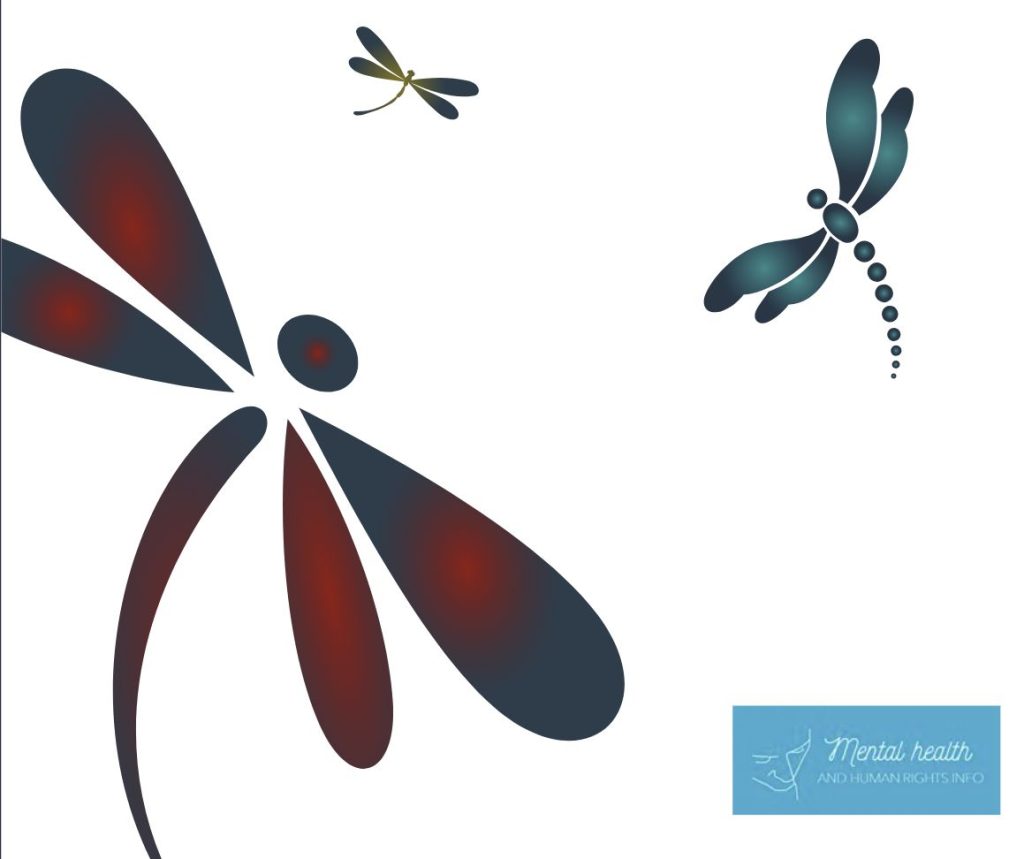
Understand why and how you can use metaphors in your work. Learn how to use the metaphors of the dragonfly, minefield, bathing duck, and wooden raft.
Stories
Learn why and how we tell stories about men and boys exposed to sexual violence and their journeys of healing. Read example stories. Use a story that fits your cultural context.
Grounding exercises
Use the Window of Tolerance as a model to understand our reactions to stress and trauma. Understand the importance of stabilizing and grounding. Learn some basic exercises.
Skills of a good helper
Be aware of your qualities as a helper. Know why and how to take care of yourself and recognize signs of secondary traumatization in yourself and others.
Authors
This toolbox has been piloted in different settings and is written by a team composed of: Nora Sveaass (responsible for the project), Helen Christie, Doris Drews, Harald Bækkelund, Sara Skilbred-Fjeld og Elisabeth Ng Langdal. Plain Sense has edited and finalised the manual. Beate Seibt at Department of Psychology, University of Oslo, has adapted it to the web.
Support and funding
This toolbox was developed at MHHRI and funded by the Dam Foundation in cooperation with Council for Mental Health, the Norwegian Ministry of Foreign Affairs and Project Mental Health. The views expressed are those of MHHRI and do not necessarily represent the policies of the Norwegian Ministry of Foreign Affairs or Project Mental Health.
MHHRI
Mental Health and Human Rights Info (MHHRI) is a database that gives free information in various languages on the effects of human rights violations on mental health in contexts of war, conflict, and disaster. The database contains a list of publications that describe and discuss psychosocial interventions at individual and community level. It also provides information about organisations working in this field.
What people are saying
Participants in a training in Turkey“This training encouraged us to use grounding exercises, and to use the the different senses in our work.”
Human Rights Foundation of Turkey